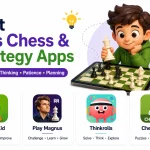
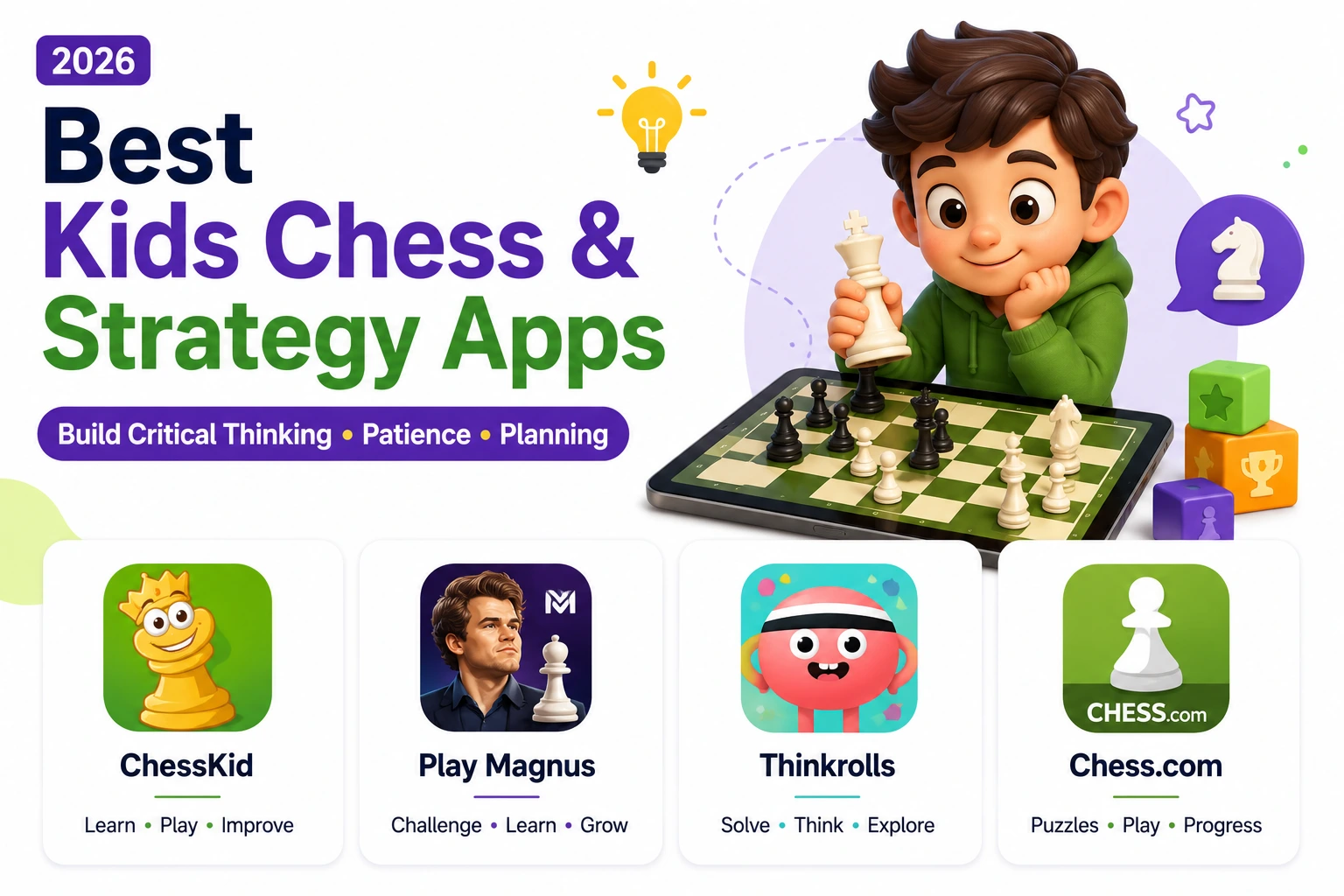
Chess has enjoyed a remarkable resurgence among children over the past few years, and parents and teachers alike have taken notice of just how much the game does for a young mind beyond simple entertainment. Planning several moves ahead, recognizing patterns, and learning to sit with the consequences of a mistake are all skills that transfer well beyond the chessboard itself. A strong lineup of kids chess and strategy board game apps has emerged in 2026 to meet this renewed interest, each taking a slightly different approach to teaching the game and related strategic thinking skills. Some focus purely on chess fundamentals with playful characters guiding lessons, while others broaden into strategy board games more generally, building the same planning and pattern-recognition muscles through different mechanics. Here is a look at the apps parents are turning to this year.
ChessKid

ChessKid, the scholastic branch of Chess.com, remains one of the most trusted names in the space, built specifically for children rather than being a stripped-down version of an adult chess app. Its animated lesson library walks young players through openings, basic tactics, and endgame ideas using friendly guides rather than dense chess notation. The app runs on a moderated, ad-free environment for playing against other kids or bots of matched skill level, which has reassured parents wary of open online play, and it is used by more than 2,000 schools for classroom chess instruction. A puzzle mode delivers bite-sized tactical challenges that adjust difficulty based on performance, keeping kids in a productive challenge zone rather than getting stuck or bored.
View on Play Store | View on App Store
Play Magnus

Play Magnus lets kids and adults alike challenge World Chess Champion Magnus Carlsen at 30 different skill levels tuned to his actual playing strength at various ages, alongside other grandmasters like Judit Polgar and Wesley So. Its tongue-in-cheek banter and achievement system make the format more playful than a typical training app, while the underlying chess engine gives genuinely useful practice at a level appropriate to the player. The app’s companion product, Magnus Trainer, adds structured mini-games and interactive lessons for players who want more explicit coaching before jumping into matches against the bots.
Thinkrolls: Fun Kids Games
Thinkrolls, from Avokiddo, broadens the scope beyond chess specifically, offering hundreds of logic and strategy puzzles built around simple physics, mazes, and pattern-based challenges rather than a fixed ruleset. The app’s philosophy is that strategic and logical thinking skills transfer across formats, so exposing young children to varied puzzle types builds more flexible thinking than mastering a single game. Its colorful, character-driven design and gradually escalating difficulty have made it a long-running favorite for children as young as two, with new puzzle packs and seasonal characters added regularly to keep the challenge fresh.
Chess.com: Play & Learn

For families where chess has already caught on and a child is ready to graduate from the kid-focused environment, the main Chess.com app offers rapid-fire tactical puzzles like Puzzle Rush designed to sharpen pattern recognition under light time pressure, alongside 500,000-plus tactics puzzles and interactive lessons. Its free 2-player pass-and-play mode makes it easy for siblings to play head-to-head on a single device, and daily puzzle streaks have turned the app into something many older kids and teens return to on their own initiative rather than needing parental prompting. Parental oversight tools and privacy settings make it a reasonable step up once a child outgrows ChessKid’s more heavily moderated environment.
View on Play Store | View on App Store
Most child development specialists agree that the specific game matters less than the consistent practice of thinking a few steps ahead and evaluating consequences, which is exactly what this category of app is designed to build. Parents introducing chess for the first time tend to have the best experience starting with ChessKid for its heavily moderated, kid-safe environment, then moving toward the main Chess.com app’s puzzle modes like Puzzle Rush once the basics are comfortable. For families who want variety beyond chess alone, Thinkrolls offers a nice way to keep the same underlying thinking skills fresh through different puzzle formats, which can help prevent burnout on a single game.
Conclusion
Strategy games have proven themselves as one of the more effective screen-time categories for genuinely building a child’s thinking skills rather than just passing time. The apps on this list each offer a thoughtful, age-appropriate path into chess and strategic thinking more broadly, giving parents confidence that the time their kids spend playing is contributing to real cognitive growth alongside the fun.