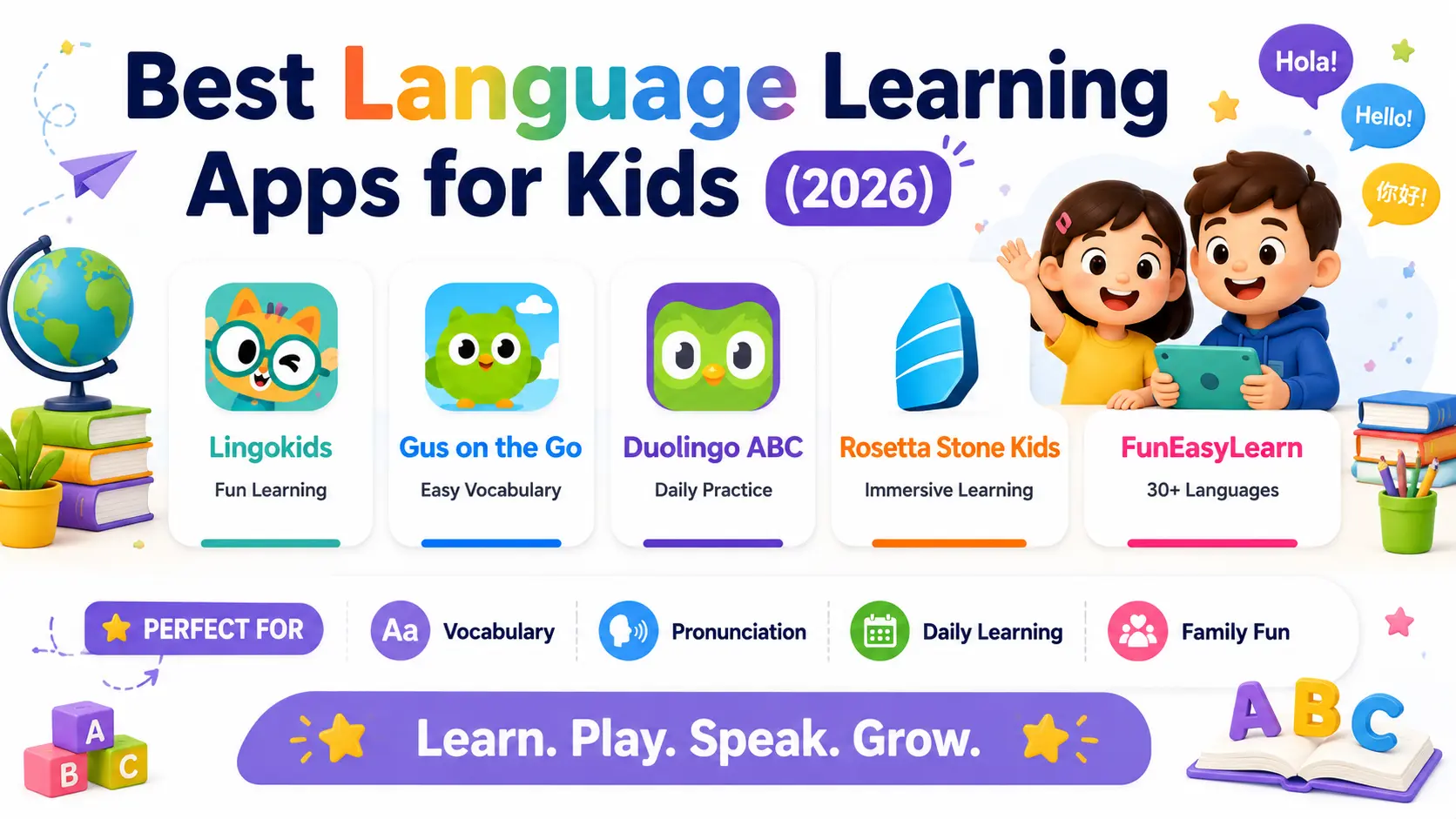
Children absorb new languages with a natural ease that fades noticeably as people age, and starting early through playful, low-pressure exposure tends to build a foundation that formal classroom lessons later can build on far more easily. Language learning apps built specifically for kids lean into that natural strength, using songs, animated stories, and simple repetitive games rather than the grammar-drilling approach typically aimed at adult learners. The strongest apps in this category also avoid overwhelming a young child with too much structure too soon, focusing instead on vocabulary and pronunciation through genuine immersion and play. Here are five language learning apps worth introducing to a child this year, whether the goal is a heritage language, a school requirement, or just early exposure to a language you speak at home. Most work well as a shared activity too, with a parent and child exploring new words together rather than a child using the app entirely alone.
Lingokids
Lingokids combines English language learning with broader early education content like math and social-emotional skills, structured around playful games and songs that keep a child’s attention without feeling like a dedicated language class.
🔗 Download on Play Store | www.lingokids.com
Gus on the Go

Gus on the Go offers a simple, animated owl-guided introduction to vocabulary across a wide range of languages, using short, low-pressure sessions that suit very young children just starting to hear new sounds and words.
Duolingo ABC and Duolingo Kids
Duolingo’s kid-focused offerings extend the brand’s familiar gamified streak system to younger learners, using bite-sized daily lessons that build vocabulary gradually through genuinely engaging short exercises rather than long study sessions.
🔗 Download on Play Store | www.duolingo.com
Rosetta Stone Kids
Rosetta Stone Kids adapts the brand’s long-standing immersion-based teaching method for younger learners, focusing on associating images directly with new words rather than translating through a child’s native language first.
FunEasyLearn

FunEasyLearn covers an unusually wide range of languages through picture-based vocabulary games and simple pronunciation practice, appealing to families looking for a less common language that bigger platforms don’t always prioritize.
Matching the app to a family’s specific goal matters more than picking the most popular option, since a family trying to maintain a heritage language spoken at home will get more value from Gus on the Go or FunEasyLearn’s broader language coverage than from Duolingo’s currently more limited kid-focused language list. Families supporting a school language requirement, most commonly Spanish or French, benefit from Duolingo Kids or Lingokids’ structured, gamified approach that mirrors how the material will eventually be tested at school. Rosetta Stone Kids suits families who value a genuine immersion method over translation-based learning, even if that approach takes a bit longer to show early vocabulary gains. Consistency in short daily sessions, ten to fifteen minutes, tends to build vocabulary far more reliably than occasional longer sessions, regardless of which specific app a family chooses.
Introducing a second language early takes advantage of a genuine developmental window that gets harder to access later, and these apps make that exposure feel like play rather than an academic obligation. Pick based on your family’s specific language goal and let short, consistent daily sessions do the real work of building vocabulary over months rather than expecting fast results from any single app alone. A relaxed, playful approach tends to build more genuine lasting interest than treating early language exposure as another academic milestone to hit.