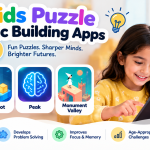
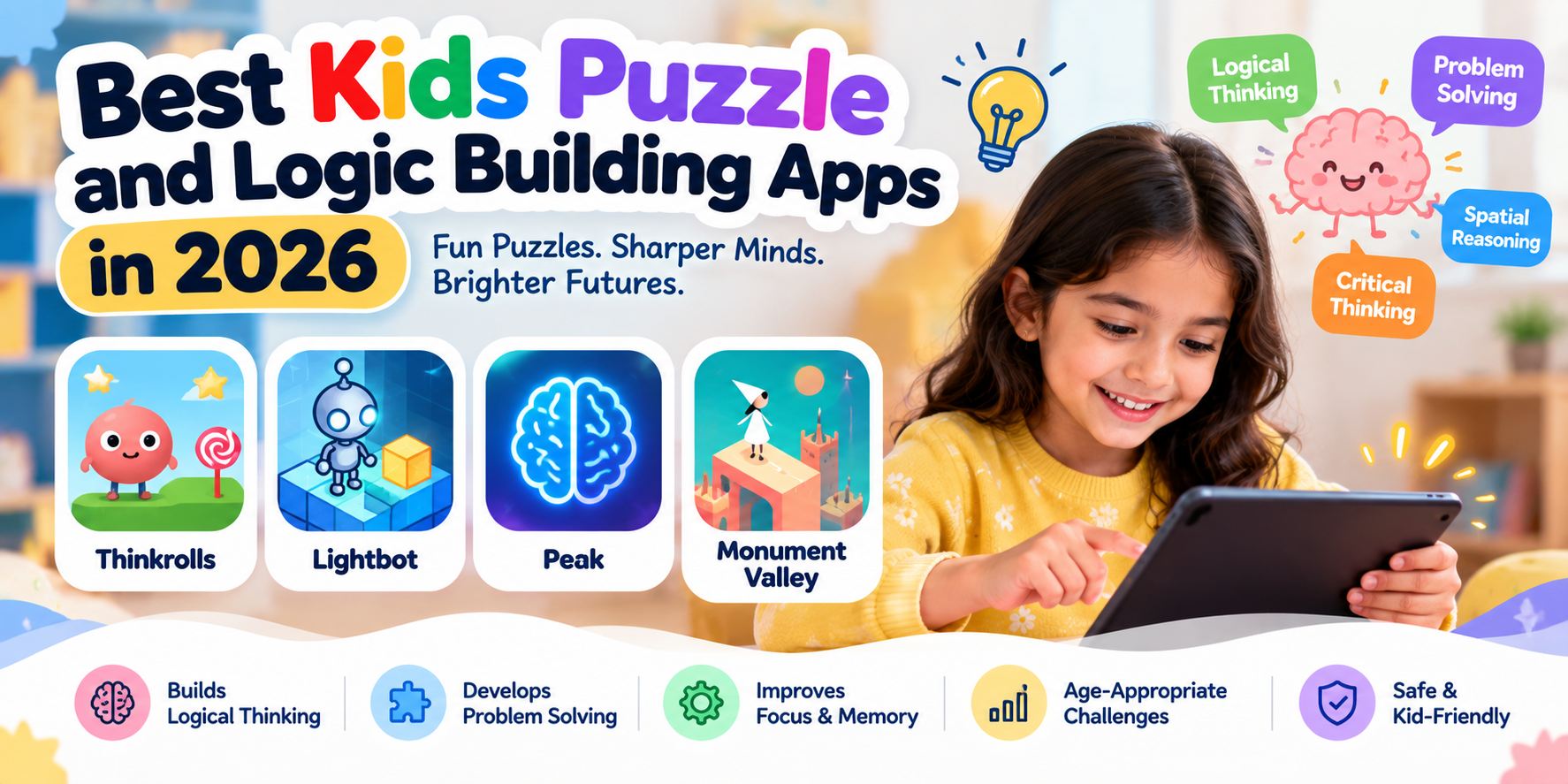
Genuine logical reasoning and spatial thinking skills develop best through hands-on puzzle solving rather than passive instruction, and a strong lineup of apps has grown up specifically to give kids progressively challenging brain teasers that build real critical thinking skills while feeling like pure play. Here’s a look at what’s worth using this year.
Thinkrolls
Thinkrolls presents kids with physics-based puzzles disguised as an adorable rolling-character adventure, requiring genuine spatial reasoning and cause-and-effect thinking to guide a character safely through increasingly complex obstacle courses. Its difficulty curve is calibrated specifically for preschool and early elementary kids, introducing genuinely new logical concepts gradually rather than overwhelming young players with complexity too early. For the youngest kids just beginning to develop logical reasoning skills, its gentle, character-driven approach remains one of the most approachable entry points available.
Lightbot
Lightbot introduces genuine programming logic through a puzzle format, requiring kids to sequence commands correctly to guide a small robot to a specific goal, building foundational computational thinking skills without requiring any actual coding syntax. Its progressively introduced concepts, loops, conditionals, procedures, mirror real programming fundamentals in a genuinely accessible, puzzle-first format that doesn’t feel like a formal coding lesson. For kids specifically drawn to logical sequencing and step-by-step problem solving, it remains one of the more intellectually substantial puzzle apps available.
Peak
Peak offers a genuinely broad library of brain-training mini-games covering logic, memory, and spatial reasoning, with clean, engaging design that works well for older kids and tweens who want cognitive challenge presented in a format that doesn’t feel explicitly childish. Its varied game library keeps sessions feeling fresh rather than repetitive, and its progress tracking gives a clear sense of which specific cognitive skills are genuinely improving over time. For older kids ready for more grown-up-feeling puzzle content, it remains a strong, versatile option.
Monument Valley
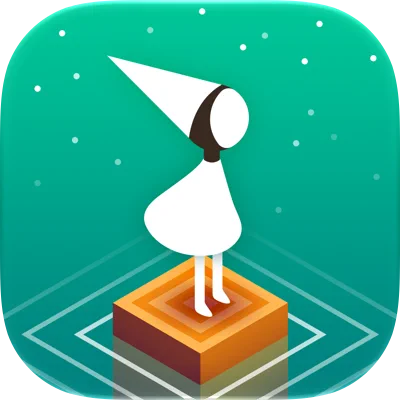
Monument Valley offers a genuinely stunning, artistically distinctive puzzle experience built around impossible architecture and perspective-shifting spatial reasoning, requiring kids and adults alike to see a scene from a genuinely different angle to find the hidden path forward. Its beautiful, calm visual design and complete absence of any failure state or time pressure make it a genuinely low-stress puzzle experience well suited to older kids who want a more contemplative, artistic challenge rather than fast-paced gameplay. For families wanting a genuinely beautiful, artistically rich puzzle experience that happens to build real spatial reasoning skill, it remains one of the most acclaimed options in the entire genre.
Matching the app to a child’s age and specific cognitive interest matters more than picking a single best option. The youngest kids just building foundational logical reasoning should start with Thinkrolls’ gentle, character-driven physics puzzles, while kids drawn to sequential, step-by-step thinking will benefit from Lightbot’s programming-adjacent logic puzzles. Older kids and tweens wanting broader cognitive variety should explore Peak’s full brain-training library, and families wanting a genuinely beautiful, contemplative spatial reasoning experience should introduce Monument Valley for its artistic, low-pressure puzzle design.
Conclusion
Building genuine logical reasoning and spatial thinking skills through hands-on puzzle solving pays off well beyond any single app, since these cognitive foundations carry directly into math, science, and everyday problem-solving throughout a child’s life. Whichever of these four ends up fitting a particular child’s age and interests, the underlying payoff remains the same: real critical thinking development happening through genuine play rather than a formal lesson.