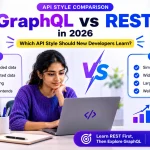
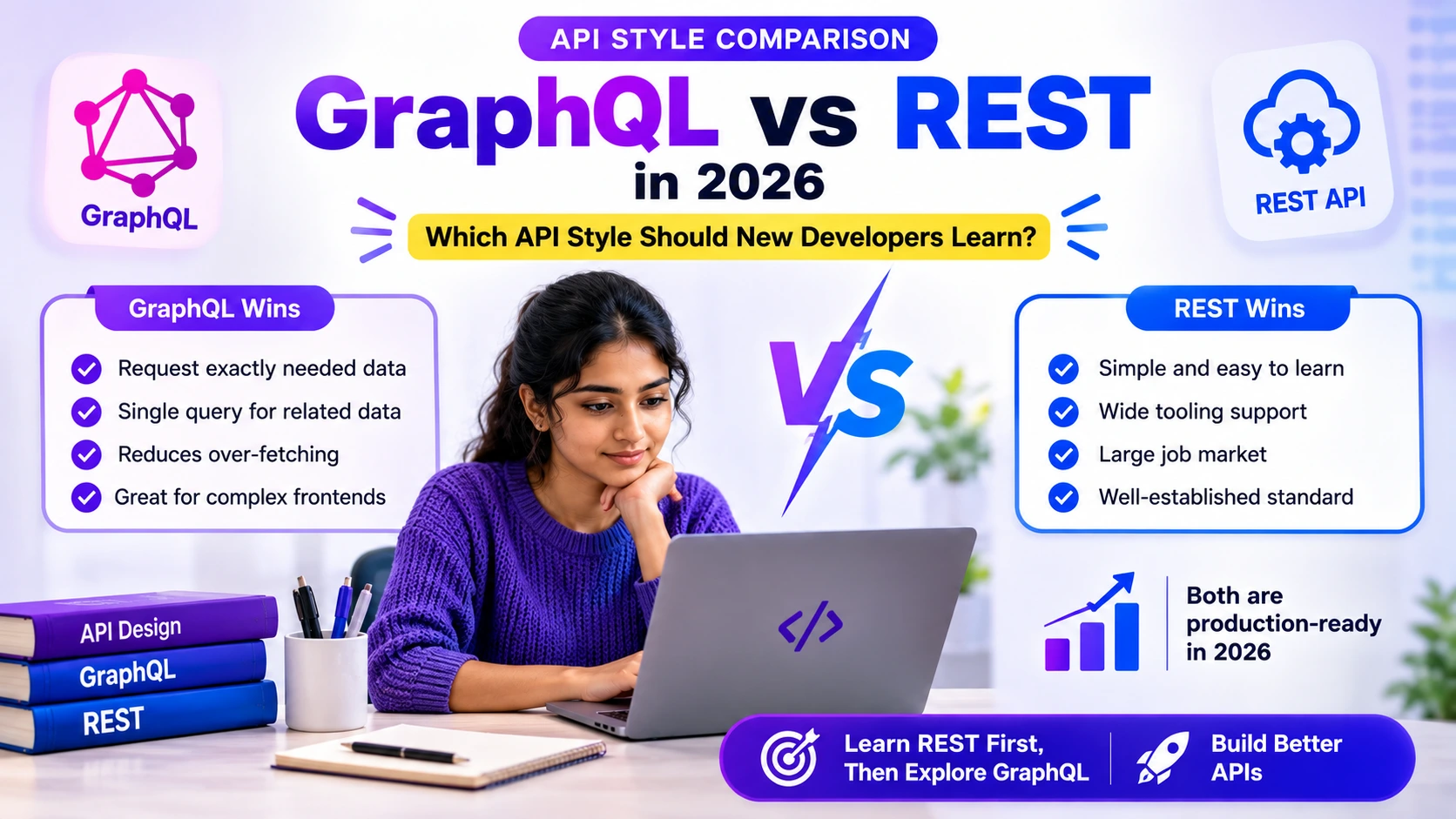
REST has remained the dominant API design style for years, valued for its genuine simplicity and widespread tooling support, while GraphQL has carved out a real, growing niche by letting clients request exactly the data they need in a single query rather than making multiple separate REST calls. By 2026, both styles have matured into genuinely production-proven choices used at serious scale, and the question of which to learn first depends heavily on the specific kind of backend work a developer actually wants to pursue. This breakdown focuses on that practical decision rather than treating the comparison as an abstract technical debate disconnected from actual job market realities.
Where REST Wins
REST’s genuine simplicity and universal tooling support make it the more approachable starting point for new developers, with a vast amount of documentation, tutorials, and existing job postings built around its well-established conventions.
Where GraphQL Wins
GraphQL’s ability to let a client request exactly the specific data needed in one query genuinely reduces over-fetching and under-fetching problems common in REST, particularly valuable for complex frontends pulling data from multiple related resources simultaneously.
The Learning Curve Difference
REST’s conventions are genuinely simpler to learn initially, while GraphQL introduces real additional concepts, schemas, resolvers, and query language syntax, that take meaningfully longer for a new developer to become comfortable with.
What Most Companies Actually Use in Practice
Many companies in 2026 use REST for simpler, more straightforward APIs while adopting GraphQL specifically for complex, data-intensive applications, meaning genuine familiarity with both increasingly matters more than picking one exclusively.
The practical reality is that REST remains the safer, more broadly applicable skill for new developers to learn first, given its simplicity and still-larger job market presence across typical backend roles. Developers specifically interested in complex, data-intensive frontend applications, e-commerce platforms with deeply related product data, or apps aggregating many different data sources, should seriously invest in learning GraphQL as a genuinely valuable specialization on top of REST fundamentals. Neither style is disappearing in favor of the other, and treating this as a permanent exclusive choice misunderstands how most engineering teams actually use both together depending on a specific endpoint’s genuine complexity and data relationships. Building the same small project’s API in both styles tends to reveal these practical tradeoffs far more clearly than reading a comparison article alone ever could. Job postings in a specific target company or region are also worth checking directly, since actual demand for either style can vary meaningfully depending on the specific industry and technology stack involved. Reading a few real job descriptions closely tends to reveal this regional and industry variation faster than any general market survey.
REST remains the more approachable starting point for new developers given its simplicity and broader job market presence, while GraphQL rewards the additional learning investment for developers specifically targeting complex, data-intensive applications. The most valuable backend developers increasingly understand both well enough to recommend the right style for a specific situation, rather than treating this as a permanent, one-size-fits-all choice between rival camps. Building a small project’s backend in each style firsthand tends to make that judgment call feel far more intuitive than reading about the tradeoffs secondhand ever could, and that hands-on experience carries genuinely more weight in an interview than reciting either style’s theoretical advantages from memory alone, since interviewers increasingly ask for real examples rather than textbook definitions.