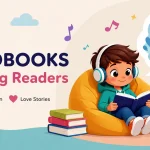
Audiobooks and read-aloud storybook apps are among the most valuable tools available to support children’s literacy development in 2026. For pre-readers and emerging readers, listening to stories builds vocabulary, narrative comprehension, and a love of books before the technical skill of decoding is fully established. For independent readers, audiobooks expand the volume of stories they can experience beyond what their reading speed alone would allow. These five apps were reviewed with families across a range of ages and reading stages over a four-week period.
1. Epic – Best Children’s Digital Library
Epic is the largest digital library for children aged twelve and under, offering over forty thousand books, audiobooks, learning videos, and read-aloud picture books in a single subscription. The Read-to-Me feature for picture books highlights words as a professional voice actor reads aloud, which supports the connection between written and spoken words that is fundamental to early reading development.
The library spans fiction, non-fiction, educational content, and popular series from major publishers. The AI-powered recommendation system learns each child’s preferences over time, surfacing books matched to their demonstrated interests and reading level. The parent dashboard provides detailed reading activity reports showing which books each child has engaged with and for how long.
Download Epic on the Play Store or App Store. Visit www.getepic.com. Free for teachers, subscription for families.
2. Audible Kids – Best for Premium Audiobook Quality
Amazon’s Audible platform includes a substantial library of children’s audiobooks narrated by professional voice actors, including celebrity narrators and authors reading their own works. The narration quality is consistently exceptional – a professional performance of a favourite book can significantly enhance a child’s experience of the story compared to a standard text-to-speech reading.
Popular series including Harry Potter, Percy Jackson, Diary of a Wimpy Kid, and hundreds of other beloved children’s books are available with narrations that are genuinely engaging as standalone audio experiences. For families who listen to audiobooks during car journeys and bedtime routines, the narration quality difference from professional human recordings versus AI-generated alternatives is meaningful.
Download Audible on the Play Store or App Store. Visit www.audible.com for membership options.
3. Storytel – Best Subscription Audiobook Library
Storytel is a subscription audiobook service with a particularly strong children’s catalogue in European and Scandinavian markets. The monthly subscription provides unlimited access to a library of over 700,000 titles including a rich children’s section with stories in multiple languages – particularly valuable for multilingual families who want their children to hear stories in heritage languages alongside English.
The 2026 app update improved the interface for child-led listening with larger artwork, simpler navigation, and a sleep timer that automatically pauses playback after a configurable duration – essential for bedtime listening that parents want to fade out gradually rather than abruptly ending.
Download Storytel on the Play Store or App Store. Visit www.storytel.com for regional pricing and library details
4. Libby by OverDrive – Best Free Library-Connected Option
Libby connects to your local public library account to provide free access to ebooks and audiobooks in the library’s digital collection. For families who want access to children’s audiobooks without any subscription cost, Libby is the most valuable free resource available – the only requirement is a library card, which is free in most countries.
The available titles depend on your local library’s digital collection budget, which varies significantly between libraries. Major public libraries in large cities typically have excellent digital collections including popular children’s titles. Smaller libraries may have more limited digital holdings, though consortium arrangements often give access to larger shared collections.
Download Libby on the Play Store or App Store. Visit www.overdrive.com and enter your library card details to access your library’s collection.
5. Vooks – Best Animated Storybook Experience
Vooks is a streaming service for animated picture books – stories where the illustrations are animated and a professional narrator reads aloud, creating something between a traditional picture book and a short animated film. This format is particularly engaging for young children aged two to six who respond strongly to movement and colour in combination with narrative.
The animated format does not replace reading physical books but provides a supplementary story-experience that maintains engagement during times when a traditional reading session would be difficult – travelling, waiting rooms, or occasions where maintaining a child’s attention is more challenging than usual. The library covers hundreds of popular children’s titles from major publishers.
Download Vooks on the Play Store or App Store. Visit www.vooks.com. Subscription from four dollars and ninety-nine cents per month.
5. Vooks – Best Animated Storybook Experience
Audiobooks work best as a supplement to, rather than a replacement for, shared reading. Listening together while following along in a physical book – particularly for chapter books that children cannot yet read independently – bridges the gap between listening comprehension and reading comprehension in a way that pure listening alone does not. For younger children, listening to stories that are slightly above their current independent reading level builds vocabulary and comprehension skills that accelerate independent reading development over time.
Start with books the child already loves in physical form and has requested many times – hearing a familiar favourite read by a professional voice actor often produces significant delight and re-engagement with a book they thought they knew completely.
How to Use Audiobook Apps to Build Reading Love
Audiobooks work best as a supplement to, rather than a replacement for, shared reading. Listening together while following along in a physical book – particularly for chapter books that children cannot yet read independently – bridges the gap between listening comprehension and reading comprehension in a way that pure listening alone does not. For younger children, listening to stories that are slightly above their current independent reading level builds vocabulary and comprehension skills that accelerate independent reading development over time.
Start with books the child already loves in physical form and has requested many times – hearing a familiar favourite read by a professional voice actor often produces significant delight and re-engagement with a book they thought they knew completely.