A fitness-focused smartwatch lives or dies by three things: how accurate its sensors actually are during real workouts, how long it lasts before needing a charge, and whether its app turns raw data into something genuinely useful instead of just a wall of numbers. The market has matured enough in 2026 that most flagship options get the basics right, so the real differences show up in battery life, specialized sport modes, and how each ecosystem handles recovery metrics. Picking between them usually comes down to which trade-offs you’re willing to accept rather than any one watch being objectively best across every category. Here are five of the best smartwatches for fitness tracking right now, across different budgets and platforms.
Apple Watch Series (Latest)
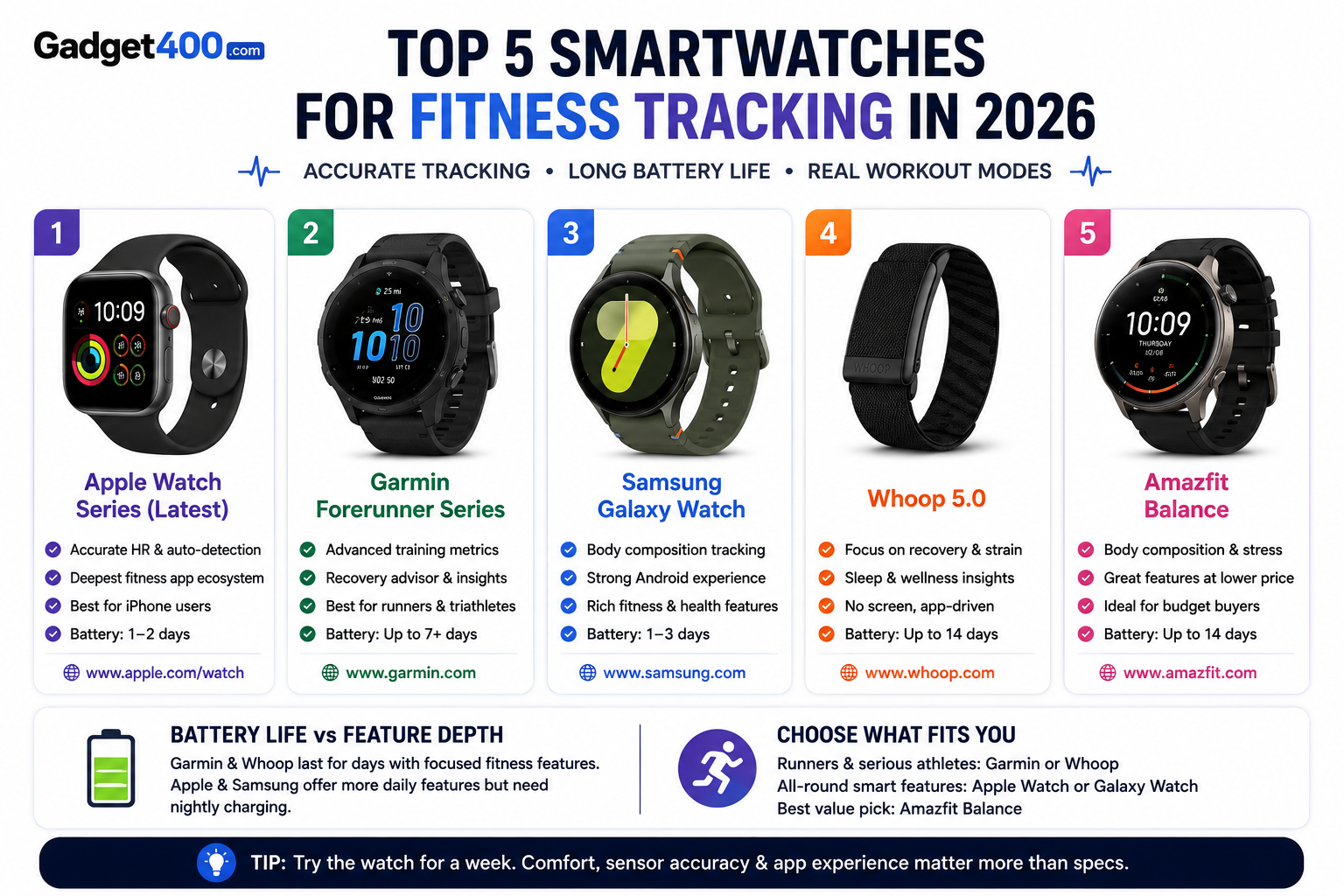
Apple Watch remains the most polished all-around option for iPhone users, with reliable heart rate accuracy, strong workout auto-detection, and the deepest third-party fitness app ecosystem of any smartwatch. Battery life is still its biggest limitation compared to dedicated fitness watches, typically requiring a nightly charge.
Garmin Forerunner Series
Garmin’s Forerunner line remains the go-to choice for serious runners and triathletes, with training load metrics, recovery advisor scores, and battery life that comfortably stretches across a full week of regular use. Its running dynamics data is still a level deeper than what most general smartwatches offer.
Samsung Galaxy Watch
Galaxy Watch pairs tightly with Samsung phones and offers genuinely useful body composition estimates alongside standard fitness tracking, using bioelectrical impedance sensors built into the case. It’s the strongest Android-native option for users wanting an Apple Watch-equivalent experience.
Whoop 5.0
Whoop skips a traditional screen almost entirely, focusing instead on recovery, strain, and sleep scores delivered through its companion app rather than the watch face itself. It’s a strong pick for athletes more interested in recovery data than step counts or notifications.
Amazfit Balance
Amazfit Balance delivers a surprisingly complete fitness feature set, including body composition and stress tracking, at a noticeably lower price point than the bigger brand names on this list, making it a strong budget pick for anyone testing whether they’ll actually stick with a fitness watch.
Battery Life vs Feature Depth: The Real Trade-Off
The biggest decision most buyers underestimate isn’t brand loyalty, it’s how much they value nightly charging convenience against deeper always-on features like continuous blood oxygen tracking or advanced sleep staging. Watches like Garmin’s Forerunner line sacrifice some smartwatch polish, no app store, simpler notifications, in exchange for battery life measured in days rather than hours. Meanwhile, Apple Watch and Galaxy Watch pack in far more daily utility beyond fitness, at the cost of needing a charger every single night, which some users find genuinely disruptive to a consistent sleep-tracking routine.
There’s no universal best pick in this category, only the right trade-off for how you actually train and live day to day. Runners and triathletes chasing detailed training metrics should lean toward Garmin or Whoop, while anyone wanting one device to handle fitness, notifications, and payments will likely be happiest with Apple Watch or Galaxy Watch despite the nightly charging routine. If you’re upgrading from an older model, try the watch on for at least a week before committing, sensor accuracy and comfort during actual workouts matter far more than spec sheet comparisons ever will. Check band compatibility and charging cable standards too, small details that are easy to overlook until you’re already a few weeks into ownership.