Kids are genuinely curious about what’s happening in the world, but adult news coverage, with its often distressing imagery and complex political framing, simply isn’t built with a young audience in mind, and a thoughtful lineup of apps has grown up specifically to deliver real current events in an age-appropriate, considerably less anxiety-inducing format. Here’s a look at what’s worth using this year.
DOGO News
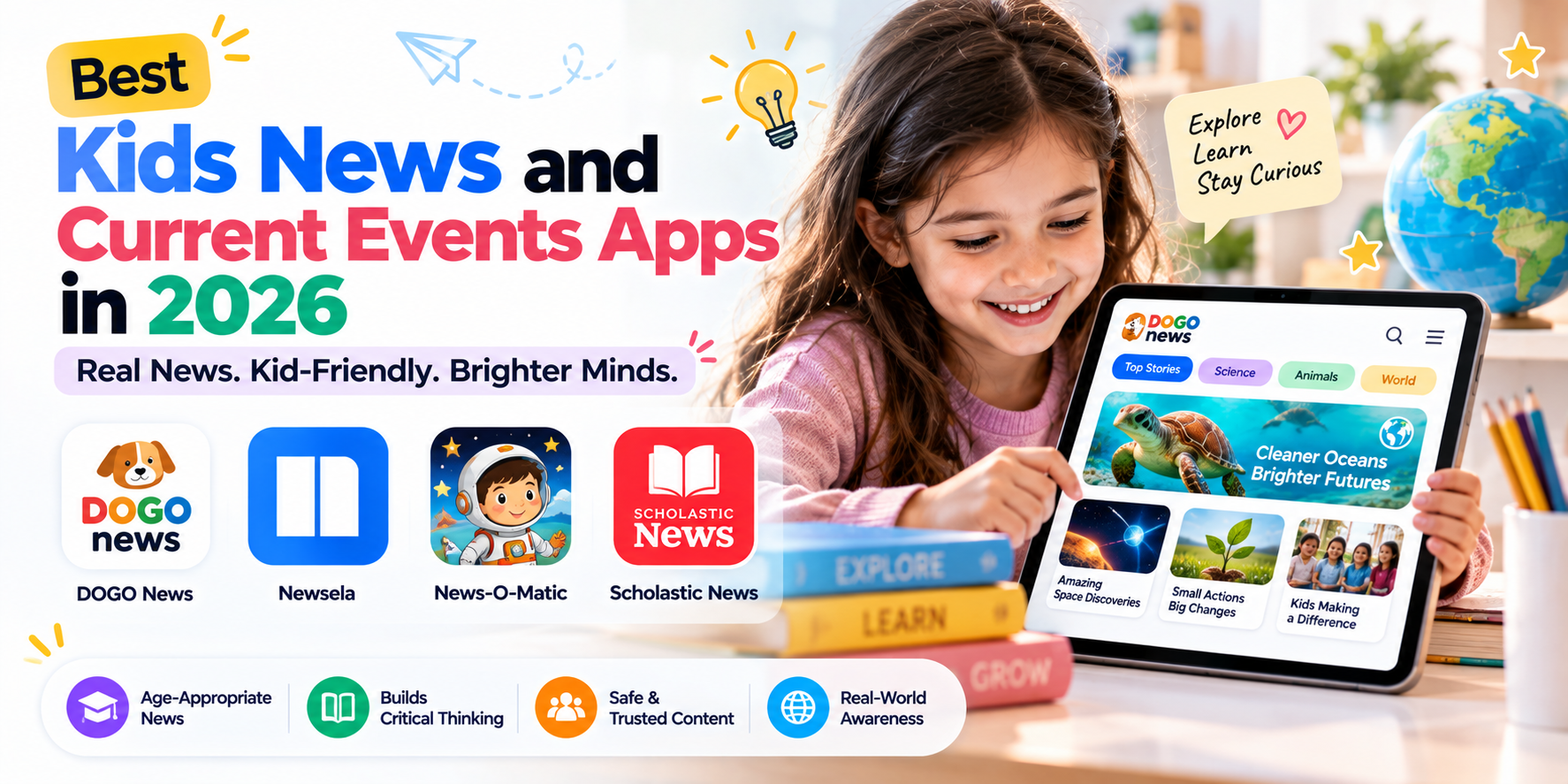
DOGO News remains one of the most established kids’ news platforms, covering genuine current events, science, sports, and entertainment stories written specifically at a level kids can understand, alongside classroom-friendly discussion questions that make it a genuinely popular choice for teachers building current events lessons. Its combination of real news coverage with an accompanying quiz and discussion format encourages kids to think critically about what they’re reading rather than passively consuming headlines. For families and classrooms wanting a well-established, trusted source specifically built for young readers, it remains one of the strongest options available.
Newsela
Newsela takes a genuinely distinctive approach, taking real news articles and rewriting them at multiple different reading levels, letting the same current event story be read by a struggling reader and an advanced reader alike at a level appropriate to their specific skill. This makes it particularly valuable for classrooms with a wide range of reading abilities, since the same lesson and discussion can work across genuinely different reading levels within a single group. For educators and families specifically wanting current events content that adapts to a child’s actual reading level rather than a single fixed format, it remains one of the more thoughtfully designed tools available.
News-O-Matic
News-O-Matic delivers daily, genuinely age-appropriate news content specifically for elementary-aged kids, presenting stories through engaging illustrations and interactive elements that make daily current events feel considerably more approachable than a traditional text-heavy news format. Its daily publication schedule builds a genuine habit of checking in on the world regularly, similar to how an adult might check a morning news app, but calibrated entirely for a young audience’s attention span and comprehension level. For younger kids just beginning to develop an interest in current events, its gentle, illustrated approach remains a strong, approachable entry point.
Scholastic News
Scholastic News leverages the trusted educational publisher’s decades of experience building age-appropriate content, delivering current events coverage alongside genuine educational context that helps kids understand not just what happened but why it matters and how it connects to broader concepts they’re learning in school. Its direct ties to classroom curriculum standards make it a particularly natural fit for teachers looking to connect current events directly to specific learning objectives. For families and schools wanting current events content backed by a genuinely established educational publishing pedigree, it remains one of the most trusted names in the category.
Matching the app to a child’s reading level and how the content will actually be used matters more than picking a single best option. Classrooms with a wide range of reading abilities should prioritize Newsela’s multi-level rewriting approach, while families wanting an established, broadly trusted source with genuine classroom discussion questions built in should start with DOGO News. Younger elementary-aged kids just beginning to develop interest in the wider world will respond best to News-O-Matic’s daily, illustrated format, and families or schools wanting current events tied directly to broader educational context and curriculum standards should look to Scholastic News.
Conclusion
Helping kids make sense of the wider world without the anxiety-inducing intensity of adult news coverage remains a genuinely valuable service, and 2026’s strongest kids’ news apps have gotten skilled at delivering real current events in a format young readers can actually process and discuss. Whichever of these four ends up fitting a particular child’s age and reading level, the underlying payoff remains the same: a kid who stays genuinely curious and informed about the world, without the anxiety that comes from consuming news built entirely for adults.