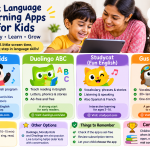
Young children pick up languages most easily through play, songs, and stories, and a good app can add a little extra exposure to what happens at home and school. In India, many families want their children to build confidence in English alongside their mother tongue, while others want a third language such as Hindi, French, or Spanish. The apps divide into a few types: play-based programs for the youngest children, early-reading apps that teach English letters and sounds, and picture-and-audio apps that introduce vocabulary in dozens of languages. A caution about sources: most ranking pages are published by language or tutoring companies, each ranking itself or its partners first, so judge apps by free trials and by whether your child asks to use them. No app replaces conversation with real people. Here are four options.
Lingokids
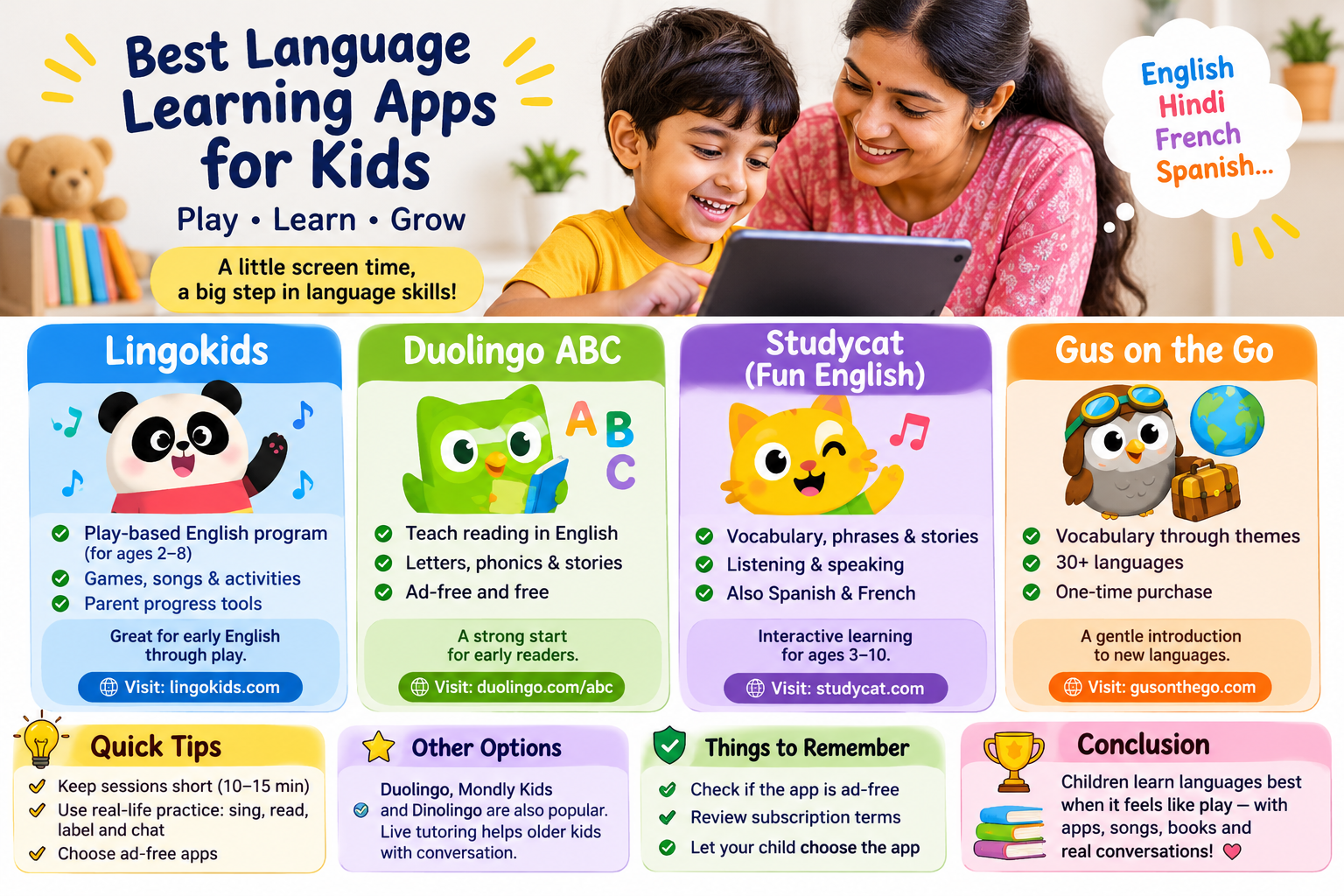
Lingokids is a play-based English program for children roughly two to eight, using games, songs, and short activities in a colorful, ad-free environment, with parent tools showing progress. It is English-focused, which suits families wanting early exposure to the language, and it has a limited free plan with a subscription for full access, reported around 15 dollars a month in some sources. Its content is designed for young learners, so older children may outgrow it. For preschoolers and early primary children learning English through play, it is a popular and well-regarded choice.
Duolingo ABC
Duolingo ABC is a free app from the makers of Duolingo, designed to teach young children to read in English through letter recognition, phonics, handwriting tracing, and short stories. It is aimed at about ages three to eight, with a clear, ad-free design, and it is a good foundation for children who are learning English as a second language because it focuses on sounds and spelling. It teaches reading, not conversation, so it works best alongside speaking practice. For early English literacy at no cost, it is one of the best options.
Studycat (Fun English)
Studycat’s Fun English teaches vocabulary and basic phrases through games, songs, and stories for children from about three to ten, with listening and speaking activities that suit independent use. Because the content is story-driven, siblings of different ages can enjoy it together. Studycat also offers courses in other languages such as Spanish and French. It runs on a subscription, and the free content is limited. For interactive listening and speaking practice in a playful setting, it is a solid pick.
Gus on the Go
Gus on the Go teaches vocabulary through themed lessons in which children help a traveling owl learn words, with separate apps for more than thirty languages. It suits ages three to seven and is typically sold as a one-time purchase per language rather than a subscription, with prices reported around 4 dollars each. Lessons are short and use pictures and native audio, which suits very young children. It teaches words rather than grammar, so it is a gentle introduction rather than a complete course. For a first taste of a new language, it is hard to beat.
Duolingo, Mondly Kids, and Dinolingo are other well-known options, and live tutoring services exist for older children who need conversation practice. Choosing among the four depends on age and goal. For English through play at ages two to eight, try Lingokids, for early reading in English, use Duolingo ABC, for songs and stories try Studycat, and for introducing other languages to the youngest children, use Gus on the Go. Support the apps with real life: sing songs together, read picture books, label items around the house, and encourage your child to use new words with family and friends. Keep sessions to ten or fifteen minutes, check that apps are ad-free and do not share data, and review subscription terms before paying.
Conclusion
Children learn languages best when it feels like play and when they use the words with real people. Pick an app that matches your child’s age and your goal, keep sessions short, and surround the screen time with songs, books, and conversation.