
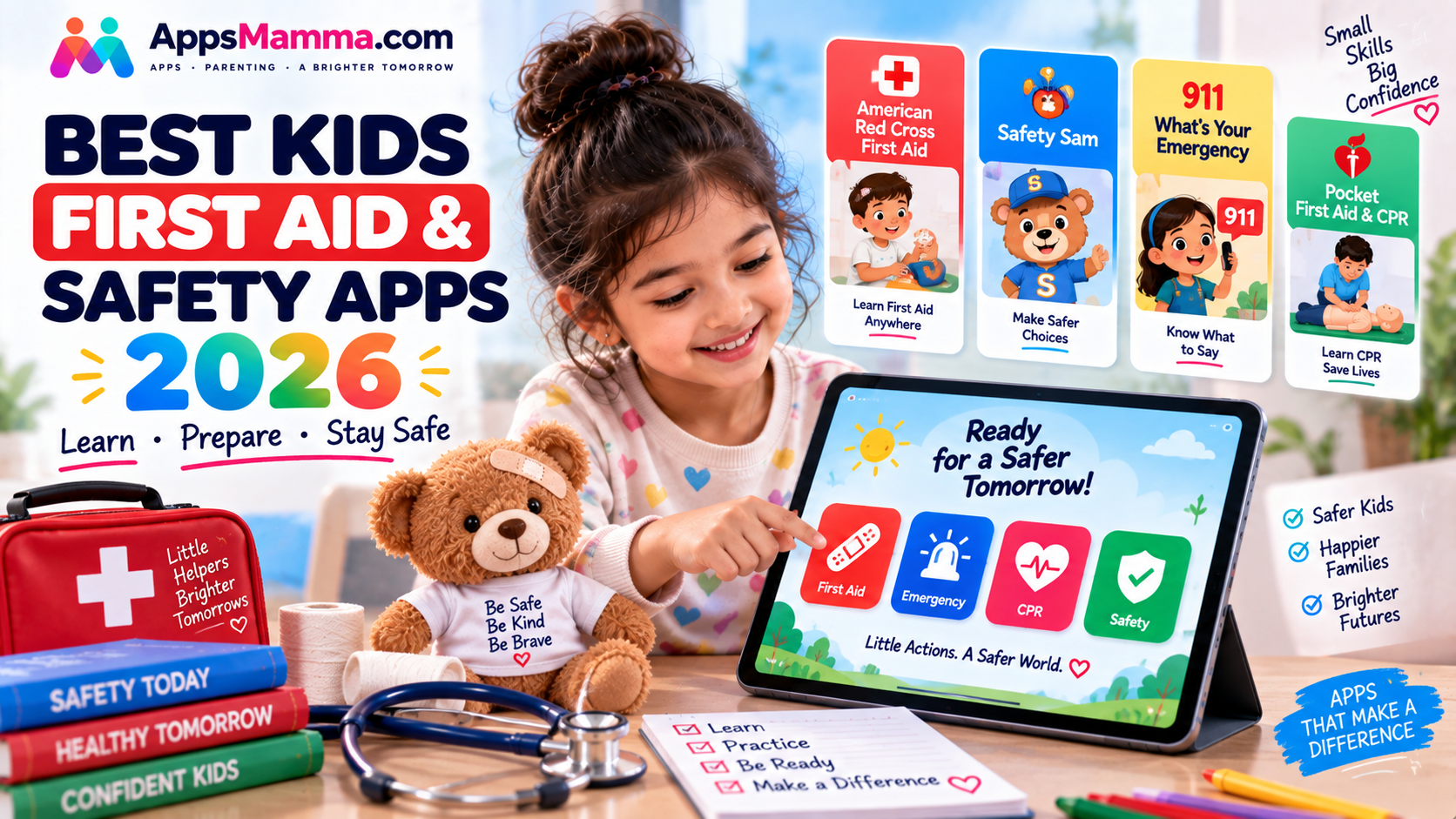
Kids can genuinely learn basic first aid and emergency response skills from a fairly young age, and a thoughtful lineup of apps has grown up specifically to teach this content in a way that builds real confidence rather than unnecessary fear. The strongest apps in this category carefully calibrate content by age, covering everything from simple scraped-knee care for younger kids to genuine emergency response steps for older children who might realistically need to help during a real situation. Here’s a look at what’s worth using this year.
American Red Cross First Aid
The American Red Cross First Aid app, while built as a general-purpose reference for the whole family, includes genuinely clear, step-by-step guidance that older kids and pre-teens can learn from directly, covering everything from basic wound care to CPR steps and choking response. Its offline access means the guidance remains available even without an internet connection, a genuinely important feature for an app that might actually be needed during a real emergency rather than only for casual learning. Interactive quizzes built into the app help reinforce learned material, turning passive reading into active recall practice that’s more likely to stick when it actually matters.
Safety Sam
Safety Sam takes a genuinely playful, character-driven approach specifically designed for younger kids, teaching basic safety concepts, stranger safety, fire safety, and simple home hazards, through an animated guide character kids can relate to more easily than a purely instructional format. Its age-appropriate framing avoids frightening young children while still building genuine, practical safety awareness about everyday situations they might actually encounter. For the youngest kids just beginning to learn basic personal safety concepts, its gentle, character-led approach remains one of the more approachable entry points available.
911 What’s Your Emergency
911 What’s Your Emergency, an educational tool built specifically to teach kids how to handle calling emergency services, walks kids through realistic scenarios of what information a 911 operator actually needs, address, nature of the emergency, staying calm on the line, through interactive, low-stakes practice rather than only telling kids to memorize the number. This practical, scenario-based approach addresses a genuinely important gap, since many kids know to call 911 in an emergency but haven’t actually practiced what to say once someone answers. For older kids specifically approaching an age where they might realistically need to make that call themselves, it fills a distinct and valuable practical gap.
Pocket First Aid & CPR
Pocket First Aid & CPR, developed in partnership with the American Heart Association, offers genuinely authoritative, step-by-step first aid and CPR guidance suitable for older kids, teens, and the whole family, presented with clear visuals and simple language rather than dense medical text. Its content specifically follows official American Heart Association guidelines, giving families confidence that the information taught matches what a certified first aid course would actually cover. For families wanting to introduce teens to genuinely credible, medically accurate emergency response knowledge before a formal certification course, it remains a strong, trustworthy resource.
Matching the app to a child’s age and what they might realistically encounter matters more than picking a single best option. The youngest kids just building basic personal safety awareness should start with Safety Sam’s gentle, character-driven introduction, while kids old enough to potentially need to call for help themselves should specifically practice with 911 What’s Your Emergency’s realistic scenario training. Older kids and pre-teens ready for genuinely credible first aid and CPR knowledge will get the most value from the American Red Cross First Aid app or Pocket First Aid & CPR, both grounded in official emergency response guidelines rather than simplified content.
Conclusion
Teaching kids genuine first aid and safety skills at an age-appropriate level builds real, practical confidence that could matter enormously in an actual emergency, and 2026’s strongest apps in this category strike a careful balance between building that competence and avoiding unnecessary fear. Whichever of these four ends up fitting a particular child’s age and needs, the underlying payoff remains the same: a child who feels genuinely capable of helping, rather than helpless, if something ever actually goes wrong.