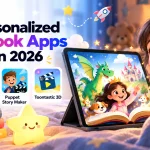
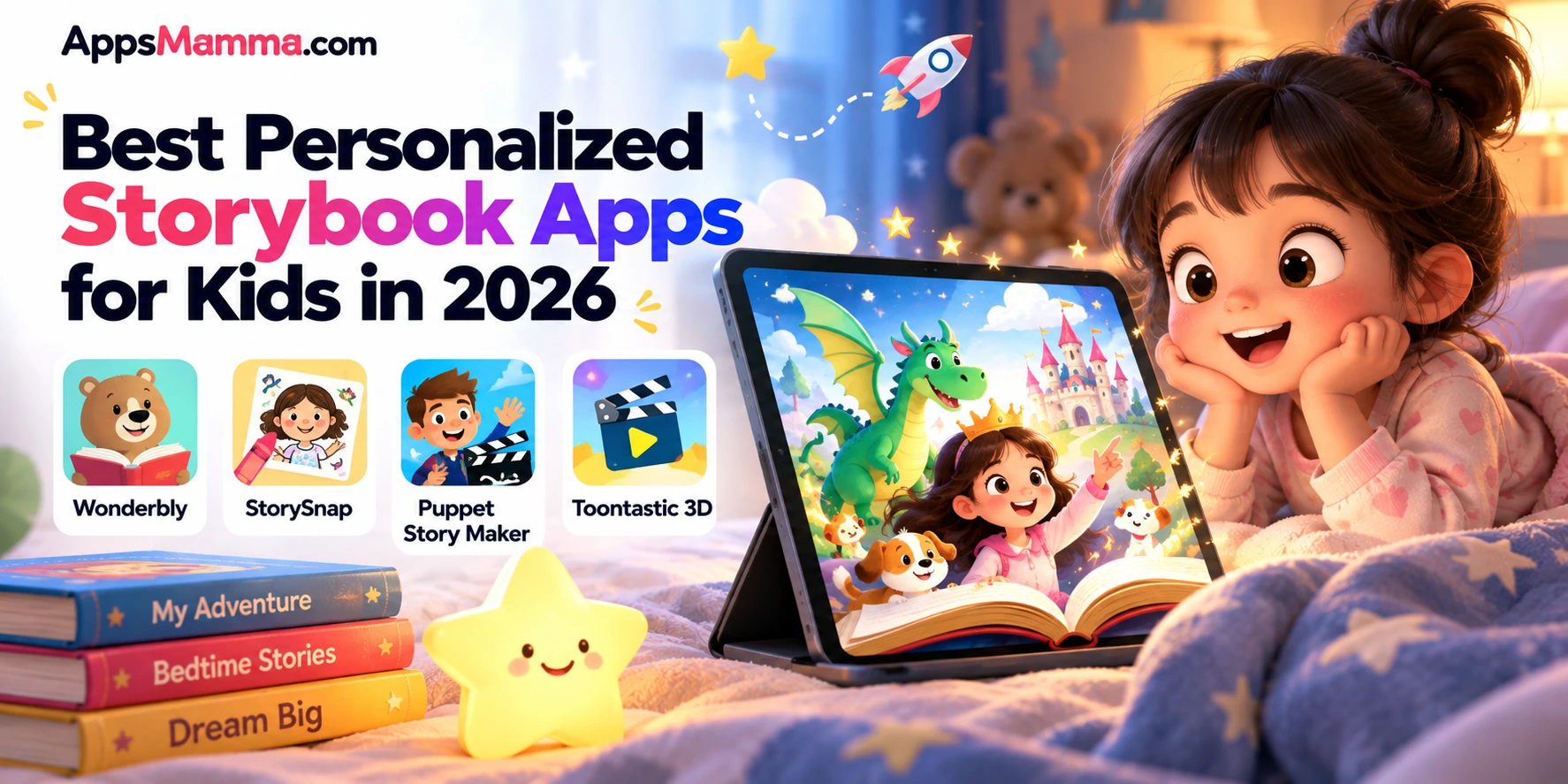
A story where a child is genuinely the main character, named directly, drawn to look like them, making choices that shape how the tale unfolds, tends to land completely differently than even the best generic bedtime book, and a strong lineup of apps has grown up specifically around this personalization. The category splits into a few distinct approaches worth understanding: apps that insert a child’s name and likeness into pre-written stories, and tools that let kids actively co-create an entirely original story from scratch. Here’s a look at what’s worth using this year.
Wonderbly
Wonderbly remains one of the most established names in personalized children’s storytelling, letting parents customize a story with a child’s name, appearance, and even nearby friends or family members who become characters in the narrative. Its polished, professionally illustrated stories cover themes ranging from adventure to emotional confidence-building, and its option to order a printed physical book alongside the digital version gives families a genuine keepsake rather than only a screen-based experience. For families who want a beautifully produced, professionally written story with genuine personalization rather than a fully open-ended creative tool, it remains one of the most trusted options available.
StorySnap
StorySnap lets a child actively participate in creating an original story by uploading their own drawings, which the app then weaves into a genuinely coherent narrative built around the child’s own artwork rather than a pre-written template. This collaborative, kid-driven approach makes the child feel like a genuine co-author rather than simply a character inserted into someone else’s story, appealing specifically to kids who enjoy drawing and want their own creative work to become part of an actual story. For families who want story creation to be a genuinely shared, creative activity between a child and the app, it remains one of the more distinctive options in the category.
Puppet Story Maker
Puppet Story Maker lets kids build their own animated story using customizable puppet-style characters, backgrounds, and simple scene transitions, giving them genuine creative control over plot, dialogue, and pacing rather than following a fixed narrative structure. Its intuitive drag-and-drop interface is specifically designed to be usable by kids independently, without requiring constant parent involvement to operate, making it a genuinely good fit for a child who wants to create stories solo during quiet time. For families who want a tool that puts genuine creative authorship directly in a child’s hands rather than only personalizing an existing story, it remains a strong, kid-driven option.
Toontastic 3D
Toontastic 3D, from Google, lets kids build and narrate their own animated 3D stories using a structured story-arc framework that gently teaches narrative structure, setup, conflict, and resolution, while remaining playful enough that kids don’t experience it as a formal lesson. Kids record their own voice acting for characters as they move them through a scene, giving the final story a genuinely personal, homemade quality that a purely text-based tool can’t replicate. Being completely free with no in-app purchases, it remains one of the most accessible tools for families who want kids to build genuine storytelling and narrative structure skills through open-ended creative play.

Matching the app to how much creative control a family actually wants matters more than picking a single best option. Families who want a beautifully illustrated, professionally written story with a child inserted as the star should start with Wonderbly, particularly if a physical printed keepsake matters. Kids who love to draw and want their own artwork woven into a story will get more out of StorySnap’s collaborative approach, and kids ready to build and narrate an entirely original story themselves, learning genuine narrative structure along the way, will thrive with Puppet Story Maker or Toontastic 3D’s fully kid-driven creative tools.
Conclusion
Seeing themselves as the genuine hero of a story remains one of the most powerful, confidence-building experiences a book can offer a child, and 2026’s strongest personalized storybook apps have gotten genuinely skilled at making that experience feel authentic rather than gimmicky. Whichever of these four ends up fitting a family’s storytelling style, the underlying payoff remains the same: a bedtime story a child will ask to hear, or help create, again and again.