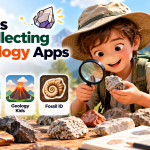
Almost every kid comes home from a backyard adventure or a family hike with pockets full of interesting rocks at some point, and a solid lineup of apps has grown up specifically to turn that natural rock-collecting instinct into genuine geology and earth science learning. The category splits into a few distinct approaches worth understanding: rock and mineral identification tools that use a photo to name a specific find, structured geology curriculum apps, and broader earth science apps covering rocks alongside volcanoes, fossils, and plate tectonics. Here’s a look at what’s worth using this year.
Rock Identifier
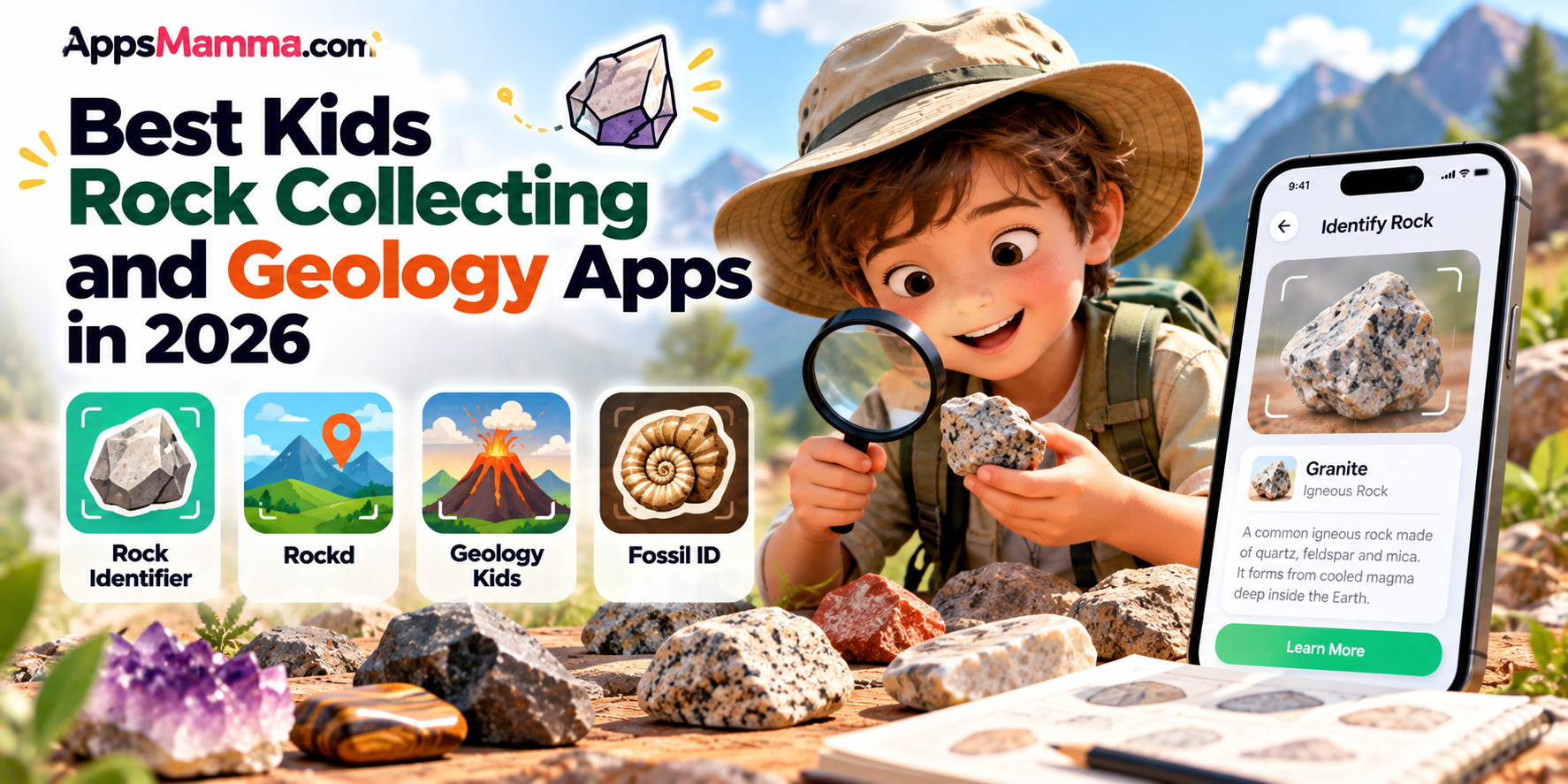
Rock Identifier uses photo-based recognition to help kids and families identify a specific rock or mineral sample, providing details on formation, composition, and where that type of rock typically occurs, turning a random backyard find into a genuine, specific learning moment. Its straightforward point-and-shoot workflow makes it accessible even for younger kids who aren’t yet comfortable navigating a more complex reference app, and its included collection feature lets kids build a running digital log of everything they’ve identified over time. For families who want the fastest path from a curious backyard find to an actual answer, it remains one of the more immediately satisfying options available.
View on Play Store | View on App Store
Rockd
Rockd, developed with genuine geological expertise, provides real geologic map data for any location, letting kids and families see the actual bedrock and rock formations beneath wherever they happen to be standing, turning a hike into a genuine window into deep geological history. Its community observation feature lets users log and share their own rock and formation findings, contributing to a broader citizen-science dataset that real geologists reference, giving older kids a genuine sense of contributing to real scientific data rather than only consuming pre-packaged facts. For families who want geology to feel like genuine field science rather than a simplified kids’ version of the subject, it remains one of the more scientifically authentic options available.
View on Play Store | View on App Store
Geology Kids
Geology Kids delivers a structured, age-appropriate curriculum covering the rock cycle, plate tectonics, volcanoes, and earthquakes, using colorful illustrations and interactive quizzes specifically designed to build a foundational understanding of how the earth actually works rather than only naming individual rock samples. Its lesson-based structure gives parents and educators a clear sense of what’s been covered and what comes next, making it a genuinely useful complement to a school science curriculum or homeschool geology unit. For families who want a more comprehensive earth science foundation beyond pure rock identification, it remains a strong, structured choice.
Fossil ID
Fossil ID extends the same photo-identification concept specifically to fossils, helping kids identify a specific fossil find and learn about the ancient creature or plant it actually came from, filling a genuine gap that pure rock and mineral identification apps don’t cover. Its content connects directly to broader paleontology and deep-time concepts, giving kids who are specifically drawn to fossils and ancient life a dedicated tool rather than folding fossil content into a broader, less specialized rock app. For families whose kids gravitate specifically toward fossils rather than rocks and minerals generally, it remains a genuinely useful specialized addition.
Matching the app to what specifically sparked a child’s interest matters more than picking a single best option. Kids who keep bringing home mystery rocks and want quick, satisfying answers should start with Rock Identifier’s fast photo-based lookup, while families who want geology to feel like genuine field science with real scientific data should move toward Rockd’s community-driven, geologist-informed approach. Kids ready for a more structured, comprehensive earth science foundation covering plate tectonics and volcanoes alongside rocks will get more from Geology Kids’ curriculum-style lessons, and kids specifically fascinated by fossils and ancient life should add Fossil ID as a dedicated specialized tool.
Conclusion
A pocket full of interesting rocks represents a genuine, if often overlooked, entry point into real earth science, and 2026’s strongest geology apps have gotten genuinely good at turning that natural curiosity into lasting scientific understanding. Whichever of these four ends up fitting a particular child’s specific fascination, the underlying payoff remains the same: turning an ordinary backyard find into a genuine appreciation for the deep history written into the ground beneath their feet.