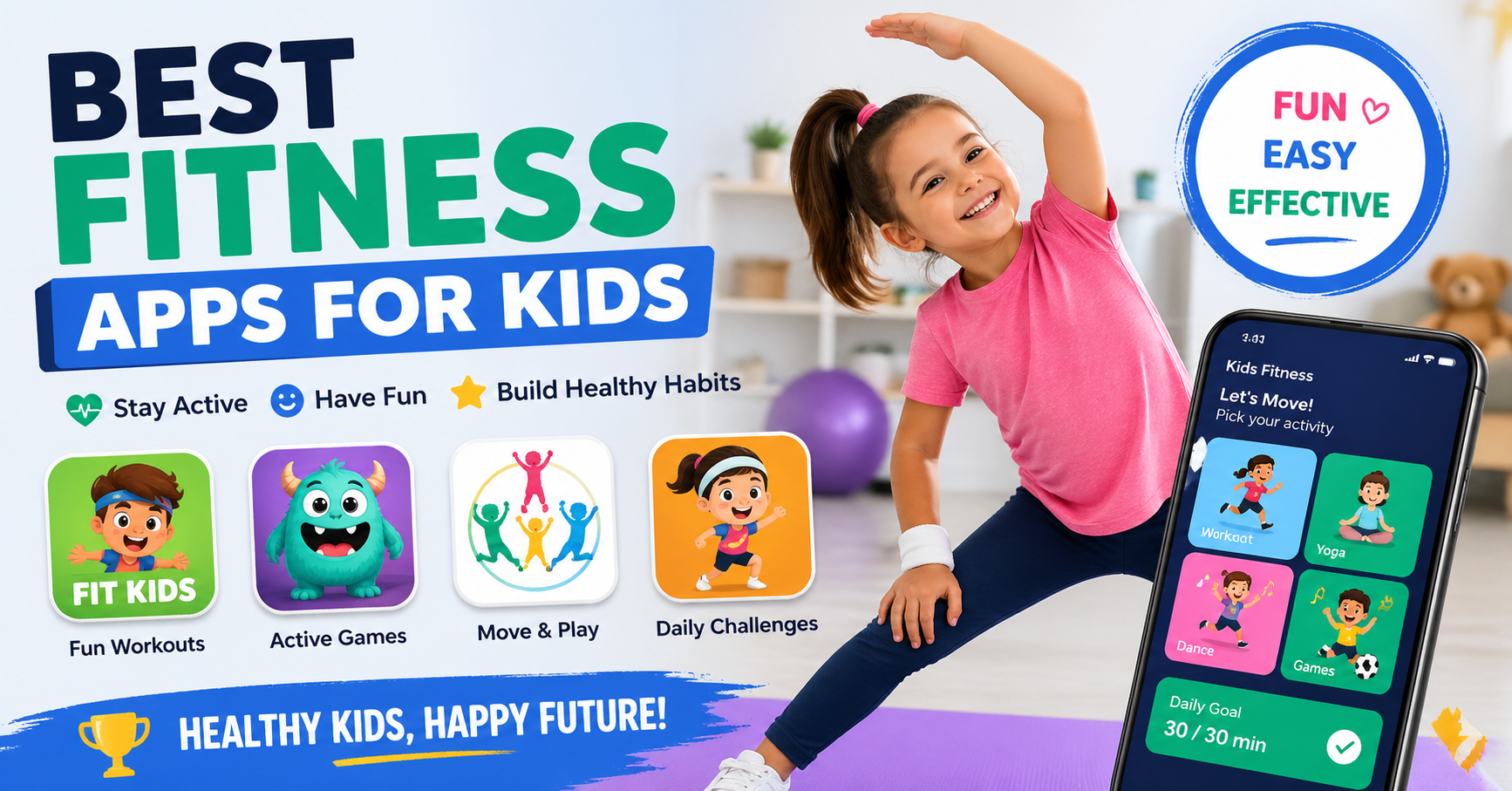
Physical activity in childhood is not just about fitness — it is about brain development, emotional regulation, social skills, and academic performance. Research from the British Journal of Sports Medicine shows that children who meet recommended physical activity guidelines perform measurably better academically, have lower rates of anxiety and depression, and develop stronger executive function. The challenge is that screens and sedentary behaviour are now the path of least resistance. These five apps fight that inertia by making movement irresistible — not through obligation, but through genuine fun.
How Much Movement Do Children Actually Need?
The UK Chief Medical Officers and American Heart Association both recommend at least 60 minutes of moderate-to-vigorous physical activity per day for children aged 5–17. This does not need to be a single session: three 20-minute bursts of active play — a morning dance session, a walk at lunch, and an evening yoga session — fulfil the requirement. The apps on this list are ideal for structured movement breaks that can be distributed across the day, especially on days when outdoor play is limited by weather.
The 5 Best Fitness and Movement Apps for Kids in 2026
1. GoNoodle — The Teacher-Loved Movement Break App
Website: https://www.gonoodle.com
GoNoodle was originally designed for classroom use, and teachers have been using it to get students moving between lessons for years. The app offers hundreds of movement videos covering dance, yoga, breathing, sports drills, and silly physical challenges led by charismatic animated characters. Most activities run 3–5 minutes — perfectly sized for a brain break or pre-homework warm-up. Children who use GoNoodle regularly in school often ask for it at home, making it an unusually easy activity to introduce. The basic app is free, with a premium subscription (around £7.99/month) unlocking the full library.
2. Cosmic Kids Yoga — Adventure Yoga for Ages 3–10
Website: https://www.cosmickids.com
Cosmic Kids Yoga packages yoga and mindfulness into storytelling adventures narrated by the energetic Jamie from the beloved YouTube channel of the same name. Children follow Jamie through yoga sequences themed around their favourite stories: there are Frozen adventures, Harry Potter sessions, Star Wars flows, and dozens of original stories. The physical challenge is genuine — children hold poses and develop real flexibility, strength, and balance — but it never feels like exercise. It feels like an adventure. The YouTube channel is free; the standalone app offers curated programmes and an offline mode for around £4.99/month.
3. Sworkit Kids — Guided Workouts Built for Growing Bodies
Website: https://sworkit.com/kids
Sworkit Kids provides guided video workouts designed specifically for children aged 7–14, covering strength, flexibility, cardio, and sports-specific conditioning. A trainer demonstrates each exercise clearly, with modifications for different ability levels. The workouts range from 5 to 30 minutes, making them practical for fitting around homework and family schedules. Parents can schedule workouts, track activity history, and join their children for family fitness sessions. Sworkit Kids is particularly valuable for older children who want more structured physical training than dance games provide. Available free with limited workouts; premium from £3.99/month.
4. Just Dance Now — Dancing That Gets the Whole Family Moving
Website: https://www.justdancenow.com
Just Dance Now turns any screen into a dance game using the phone as a motion controller. Players follow on-screen choreography to popular songs and are scored on accuracy — creating the same competitive motivation that makes the console version of Just Dance one of the best-selling games of all time. For families, the appeal is the inclusive, cooperative energy: parents and children can play together regardless of fitness level, and the songs span decades of popular music meaning different generations will recognise different tracks. The app is free with a small catalogue; a subscription (around £3.99/month) unlocks the full song library.
5. Pokémon GO — Outdoor Adventure That Requires Actually Walking
Website: https://pokemongolive.com
Pokémon GO remains one of the most effective tools ever created for getting children to walk willingly and enthusiastically. The game requires players to physically move through the real world to find Pokémon, hatch eggs by walking specified distances, and reach PokéStops and Gyms. For parents of Pokémon fans aged 7 and up, Pokémon GO transforms the negotiation around outdoor activity from conflict to enthusiasm. Play alongside your child for both safety and shared experience. The app is free; optional in-app purchases are available but not required for meaningful engagement.
Building a Movement Habit That Outlasts the App
The goal of any fitness app should be to build the habit of enjoying movement — not dependency on the app itself. As children find activities they genuinely enjoy through these apps (a love of dance from Just Dance, a yoga practice from Cosmic Kids), encourage them to pursue those activities in the physical world too: joining a dance class, attending a school yoga session, playing Pokémon GO with neighbourhood friends. Apps are the gateway; the habit is what lasts.