
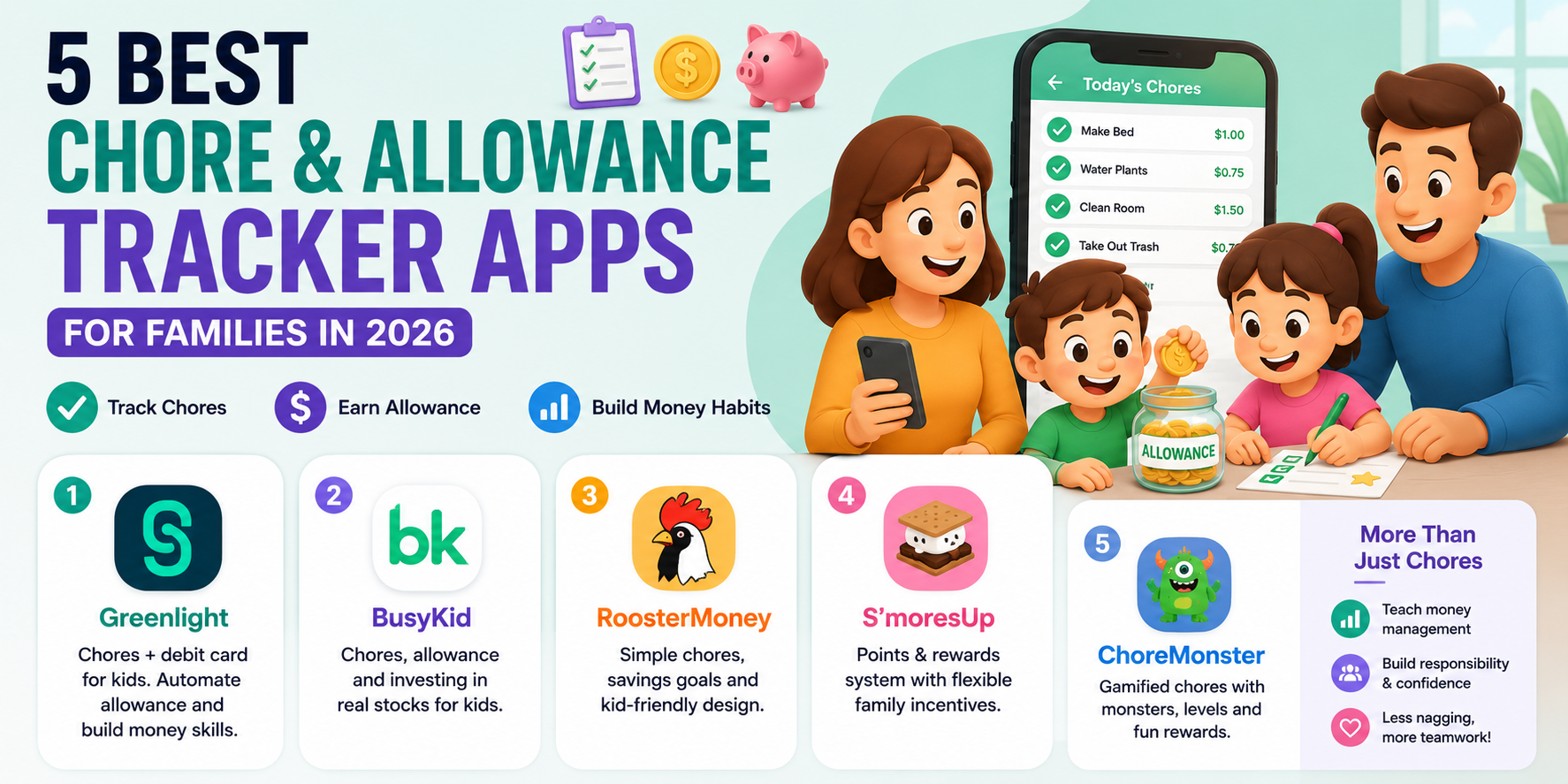
Getting kids to consistently do chores without constant reminders is a genuinely common household struggle, and connecting that responsibility to a small allowance tends to work better than either chores or money taught as entirely separate concepts. The right app makes that connection visible and automatic, tracking completed tasks and letting kids watch their earnings grow in real time rather than relying on a parent’s memory of who did what and when. That visibility alone tends to reduce a surprising amount of household friction, since the tracking removes the sense of unfairness that often fuels sibling arguments over chores. Here are five chore and allowance tracker apps in 2026 that make household responsibility feel like a genuine system instead of a constant negotiation.
Greenlight

Greenlight combines a genuine debit card for kids with chore tracking and allowance automation, letting parents set recurring or one-time chores that automatically trigger a payment once marked complete, alongside broader financial education tools built into the same app.

BusyKid

BusyKid ties chore completion directly to a weekly payday system, and notably lets kids invest a portion of their earnings in real stocks, adding an investing education layer that goes beyond most competitors in this category.
RoosterMoney

RoosterMoney keeps things approachable for younger kids with a simple chore checklist and visual savings goals, making the connection between completed tasks and growing savings genuinely easy for a child to understand at a glance.
S’moresUp

S’moresUp gamifies chores with a points and rewards system that can be customized to family-specific incentives beyond just cash, appealing to families who want more flexible reward structures than a straightforward per-chore payment.
ChoreMonster
ChoreMonster leans into playful gamification with monster characters and unlockable rewards, designed specifically to make chores feel like part of a game rather than an obligation for younger children who respond well to that kind of framing.
Turning Chores into a Genuine Money Lesson
The real value in these apps isn’t just getting dishes washed without a fight, it’s giving kids an early, low-stakes framework for connecting effort to earnings, something that tends to stick far better when experienced directly rather than explained in the abstract. Apps like BusyKid and Greenlight take this further by letting kids see their earnings actually grow or shrink based on saving versus spending decisions, turning allowance into a genuine hands-on financial literacy tool rather than just pocket money handed over on a Friday. It’s worth involving kids in setting the chore list and reward amounts themselves where age-appropriate, since a system they helped design tends to get followed more consistently than one purely imposed from above. Reviewing the earnings together weekly, rather than letting the app run silently in the background, also turns the whole system into a regular touchpoint for talking about money in a low-pressure way.
None of these apps eliminate the need for a parent to occasionally check in and confirm chores were actually done properly, but they do remove the constant verbal reminders and arguments that usually come with a purely manual system. Start with a simpler, visual app like RoosterMoney for younger kids, and consider Greenlight or BusyKid as they get older and ready for a more genuine hands-on introduction to money management. Revisit the chore list and reward amounts every few months too, what motivates a seven-year-old rarely still works the same way once they’re eleven.