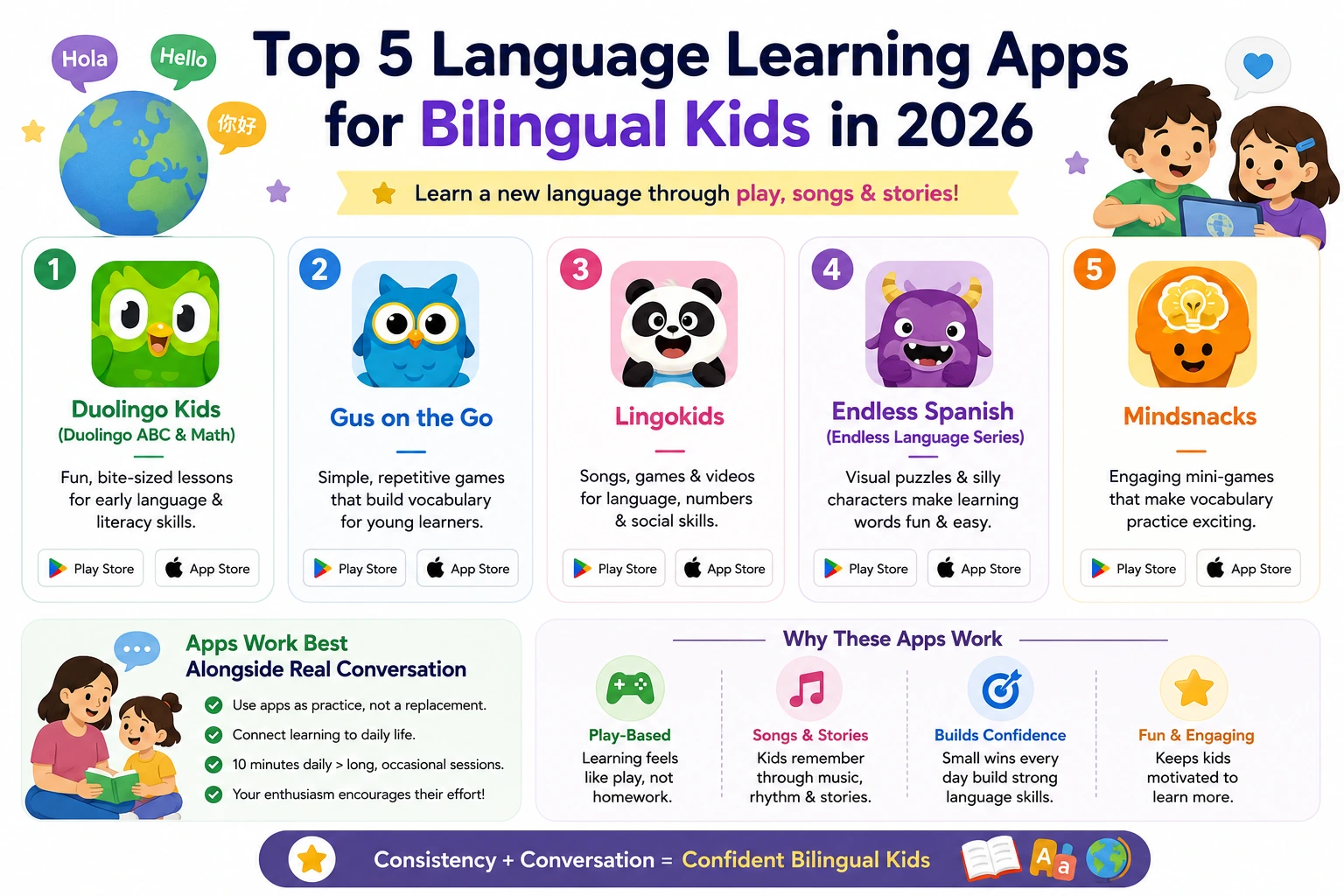
Raising a bilingual child is genuinely easier with consistent, playful exposure to a second language, and the right app can reinforce what’s being spoken at home or in a bilingual classroom without feeling like an extra lesson tacked onto an already busy day. Kids absorb language most naturally through games, songs, and stories rather than vocabulary drills, so the strongest apps in this category lean heavily into play rather than replicating a formal classroom experience on a screen. The goal isn’t turning screen time into homework, it’s making a second language feel like a genuinely normal, enjoyable part of daily life. Here are five language learning apps in 2026 that make a second language feel like genuine fun for kids rather than another chore.
Duolingo Kids (Duolingo ABC and Math)
Duolingo’s kid-focused apps use the same bite-sized, gamified lesson structure that made the main app popular, adapted specifically for early literacy and language exposure with colorful characters and short, achievable daily lessons.
Gus on the Go
Gus on the Go teaches vocabulary across a wide range of languages through a simple, repetitive game format built around a friendly owl character, designed specifically for very young children just starting to build a second-language vocabulary.
Lingokids
Lingokids combines songs, games, and short animated videos into a genuinely comprehensive early language curriculum, covering both vocabulary and broader concepts like numbers and social skills within a bilingual, playful framework.
Endless Spanish (and Endless Language Series)
The Endless series uses charming, silly monster characters to teach vocabulary and sentence structure through visual puzzles rather than rote repetition, making it a particularly good fit for kids who respond better to humor than structured lessons.
Mindsnacks
Mindsnacks wraps language vocabulary practice into a series of genuinely well-designed mini-games, appealing to slightly older kids who want something that feels more like actual gaming than an obvious educational app.
Apps Work Best Alongside Real Conversation
No app, however well designed, replaces the value of genuine conversation in a second language, whether that’s with a bilingual parent, grandparent, or community, since kids ultimately learn language through real interaction far more effectively than through a screen alone. Use these apps as reinforcement and playful practice between real conversations, rather than the primary source of language exposure, and look specifically for moments to connect what a child learned in an app to something happening in daily life, naming foods at dinner in the second language, for instance. Consistency matters more than intensity here too, ten genuinely engaged minutes a day tends to build stronger language habits over months than occasional long sessions squeezed in only when there’s spare time. Kids also pick up on parental enthusiasm, showing genuine interest in what they’re learning tends to encourage more effort than treating the app as background babysitting.
Bilingual language development is a genuinely long game, and these apps work best as one supportive piece of a much bigger picture that includes real conversation, books, and cultural exposure over years rather than weeks. Pick whichever app matches your child’s current age and language level, and don’t worry about switching between a few of them, kids often respond well to variety rather than sticking with a single app indefinitely. Celebrate small wins along the way too, a new word used correctly at dinner is worth genuinely more encouragement than most parents realize.