Bedtime can be one of the most exhausting parts of a parent’s day, and a consistent, calming wind-down routine tends to make the whole process smoother than fighting the same battle every single night. Bedtime story apps aren’t meant to replace a parent reading aloud, but they genuinely help on nights when energy is low, or as a complement to a broader routine that includes real books and real conversation too. The best ones use calm narration, gentle pacing, and screen settings specifically designed not to overstimulate a child right before sleep. That distinction matters more than most parents realize, since not every kids’ app, however well-designed for daytime play, is actually appropriate for the hour before bed. Here are five bedtime story apps in 2026 that genuinely help kids wind down rather than wind up.
Moshi: Sleep and Mindfulness

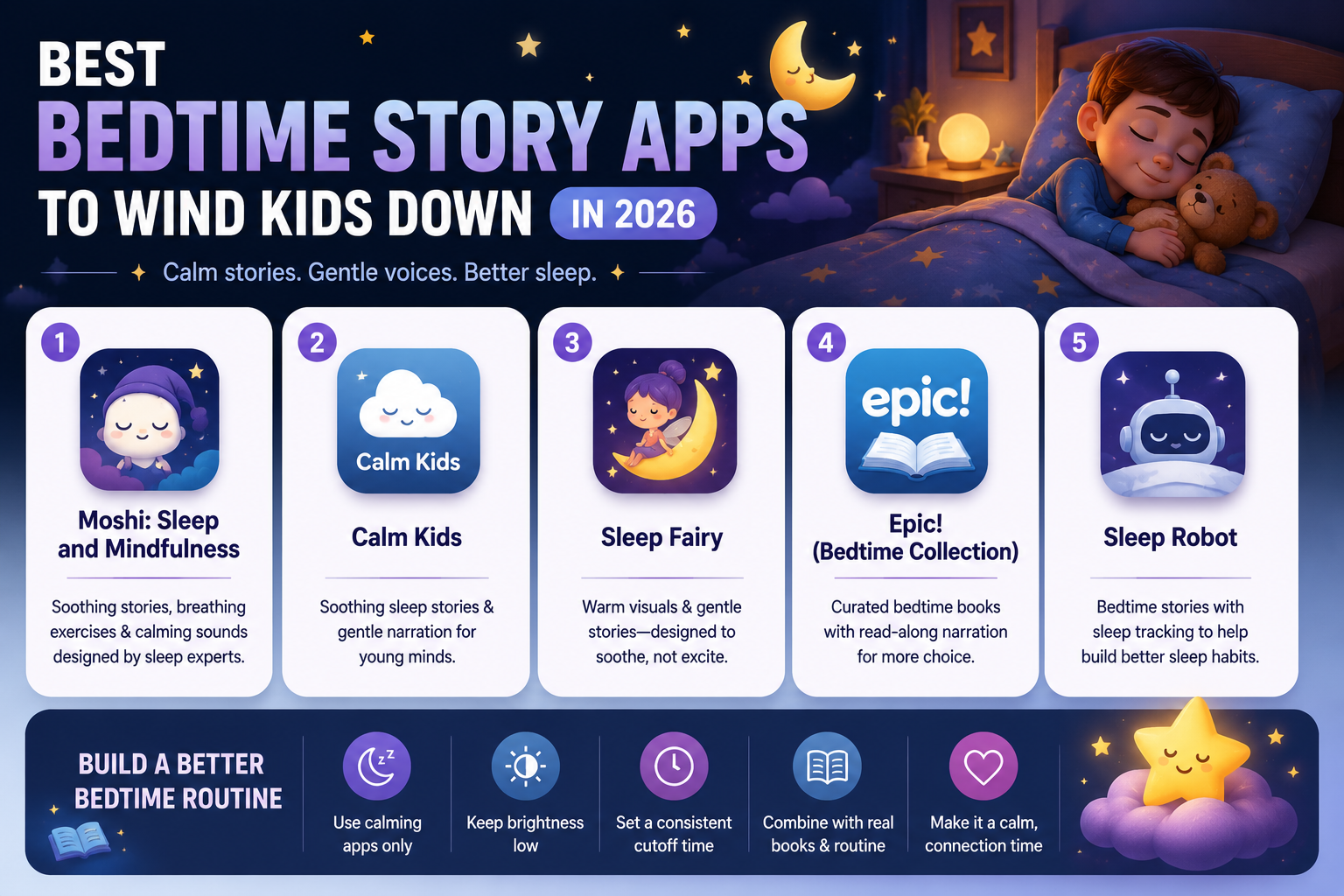
Moshi combines soothing bedtime stories with gentle breathing exercises and calming sounds, specifically designed by sleep experts to ease kids into a relaxed state rather than just passively entertaining them before lights out.
Calm Kids
Calm’s kids-focused content brings the same soothing sleep stories and narration quality that made the main Calm app popular, adapted specifically for younger listeners with gentler pacing and simpler themes.
Sleep Fairy
Sleep Fairy uses a simple, screen-dimming interface with warm-toned visuals and gentle stories, deliberately designed to avoid the bright, stimulating colors that make many kids’ apps a poor fit for pre-bedtime use.
Epic! (Bedtime Collection)

Epic’s bedtime-specific book collection lets kids choose from a curated library of calm, gentle stories with read-along narration, appealing to families who want more choice than a purely algorithmic bedtime story selection.
Sleep Robot
Sleep Robot combines a gentle bedtime story format with a simple sleep-tracking element for older kids who enjoy seeing their own sleep habits visualized, adding a small layer of engagement without becoming overstimulating.
Building a Screen-Friendly Wind-Down Routine
Screens before bed carry a genuine risk of overstimulation, largely due to bright light and fast-paced content rather than screens themselves being inherently disruptive to sleep, so choosing an app specifically designed for bedtime, dim colors, slow pacing, calm narration, matters considerably more than picking any random kids’ app and hoping it works at night. Setting a consistent cutoff time, using the app as one fixed step in a broader routine rather than an open-ended activity, and dimming the device’s brightness manually alongside the app’s own design all compound to make the transition to actual sleep noticeably smoother. Pairing the app with a physical routine step, brushing teeth, then story time, then lights out, also helps a child’s body recognize the pattern independently of the specific app being used that night. Over time, that consistency matters more than any single app’s specific content, since the routine itself becomes the real sleep cue rather than any particular story or feature.
No app replaces the genuine comfort of a parent’s voice reading aloud, but on nights when that’s not possible, or as a consistent complement to it, these apps offer a genuinely calming alternative built specifically for winding down rather than winding up. Start with Moshi or Sleep Fairy if screen overstimulation has been a struggle, and treat whichever app you choose as one fixed piece of a broader, consistent bedtime routine rather than the entire solution on its own. Keep brightness low and volume gentle regardless of which app you pick, those two small adjustments often matter more than the specific content chosen for the night.